By: Partido Lakas ng Masa via FB
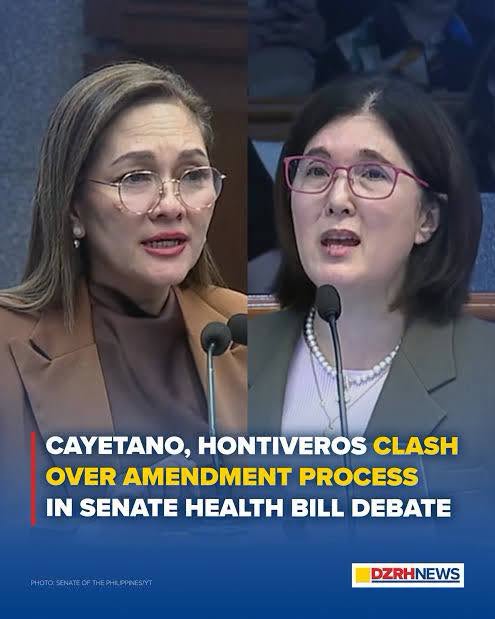
The recent exchange between Senators Pia Cayetano and Risa Hontiveros over the issue of hospital bills and promissory notes has exposed a fundamental political divide that goes beyond legislative details.
At its core, the debate is not simply about payment mechanisms. It is about whether public policy should prioritize the interests of private hospital owners or uphold the state’s responsibility to guarantee health care for the poor.
Senator Pia Cayetano has effectively taken the side of private hospitals by emphasizing the financial burdens that expanded promissory note mechanisms may place on private health institutions. While the financial viability of hospitals is a legitimate concern, the dominant framework she advances places the protection of private health enterprises at the center of the discussion.
Senator Risa Hontiveros, on the other hand, correctly highlights the plight of indigent patients who are often denied discharge, subjected to harassment, or forced into deeper debt because they cannot immediately settle hospital bills. Her proposal to strengthen the use of promissory notes, backed by government support institutions and financing mechanisms, moves in the direction of recognizing that access to health care is a social right rather than a commodity reserved for those who can pay.
The exchange between Senators Cayetano and Hontiveros ultimately reflects two competing perspectives. One seeks primarily to protect the financial interests of private health institutions. The other recognizes the obligation of the state to protect the poor.
However, the issue goes even deeper.
The real problem is that Philippine health care remains heavily dependent on private capitalist institutions. Successive governments have failed to build an adequately funded, comprehensive, and accessible public health system capable of serving the needs of the majority.
As a result, millions of Filipinos are forced to rely on private hospitals whose operations are ultimately governed by profitability and market considerations.
The solution cannot simply be to negotiate a compromise between poor patients and private hospital owners. The solution must be to expand the public health system itself.
The government must assume greater responsibility by:
• Strengthening and fully funding public hospitals nationwide;
• Building more government hospitals, particularly in underserved provinces and urban poor communities;
• Expanding public health personnel and improving their wages and working conditions;
• Establishing government-backed guarantee funds that immediately cover the hospital costs of indigent patients;
• Ensuring that no patient is denied treatment, detained, or prevented from leaving a hospital because of poverty;
• Moving progressively toward a universal, publicly funded health care system accessible to all.
Our lawmakers should understand that health care is not a privilege. It is not a business opportunity. It is a fundamental human right.
The long-term answer is not greater dependence on private hospitals. It is a massive expansion of public health care under democratic public ownership and control, where the needs of people come before profit.
#

