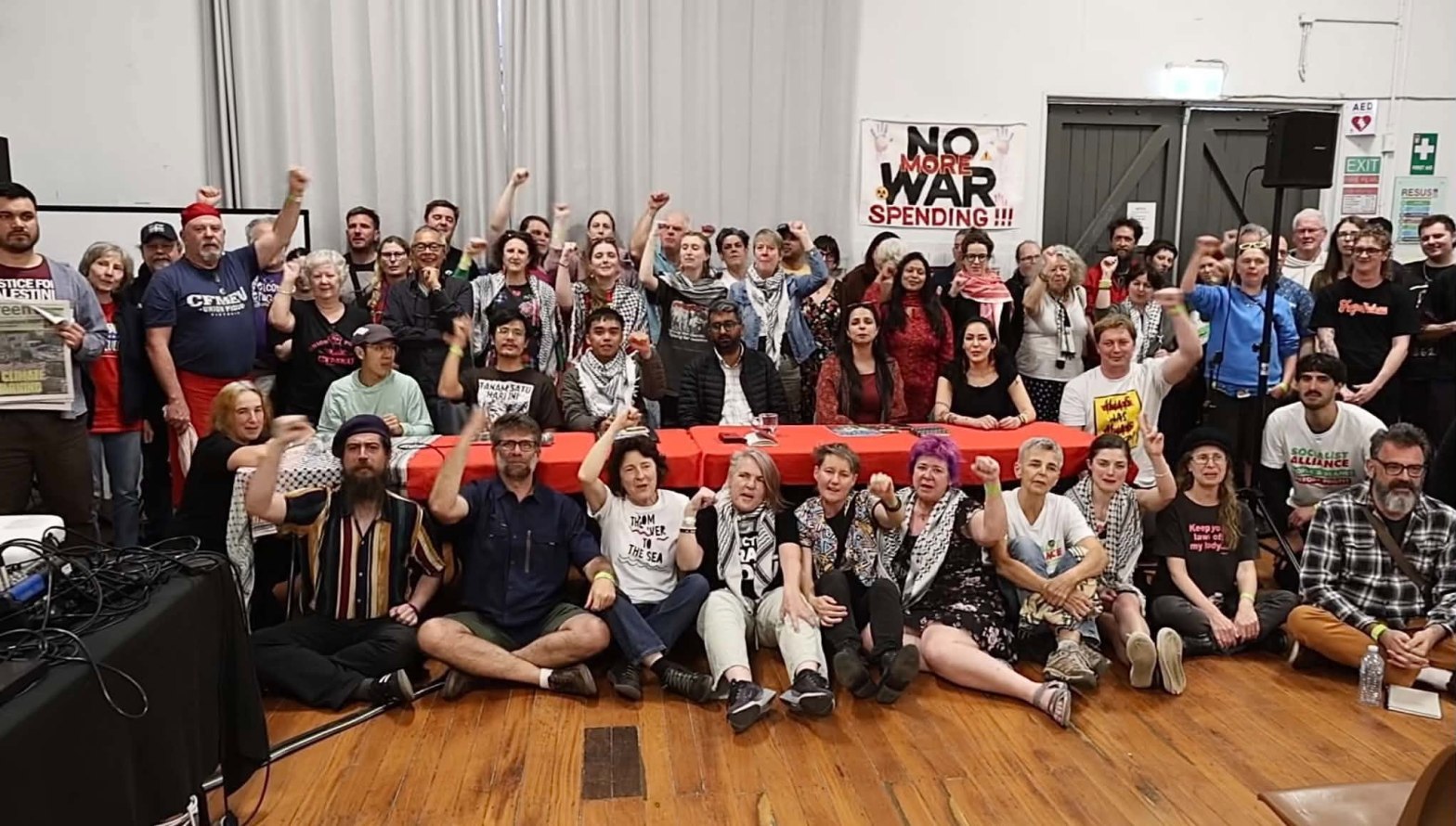
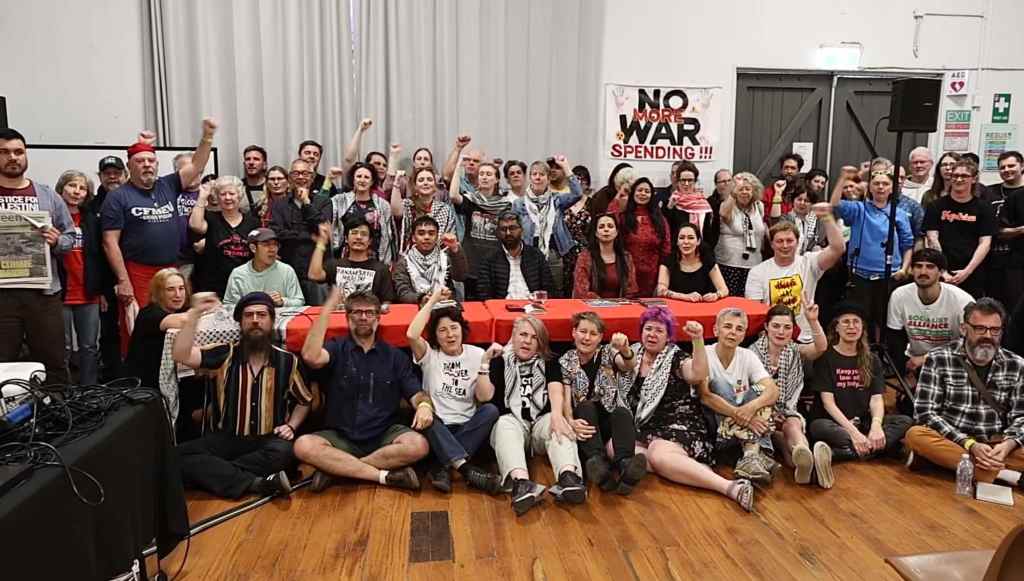
Partido Lakas ng Masa (PLM) joined the Ecosocialism 2026: Resistance, Decolonisation, and Liberation Conference, held from 11-13 September 2026 in Magan-djin/Brisbane, Australia.
Organized by Socialist Alliance, Green Left, Resistance Books, and LINKS: International Journal of Socialist Renewal, the conference brought together more than 140 cosocialist activists, intellectuals, and grassroots movements from across Asia, Latin America, and Australia. Discussions collectively analysed and confronted imperialism led by the United States and Trump, recolonisation, the rise of the far right, genocide and wars of aggression, and the ecocide that is worsening the destruction of the world. The conference also provided a space for activists to learn from each other, resist capitalism’s depravity and militarism, and build stronger movements for an ecosocialist alternative.
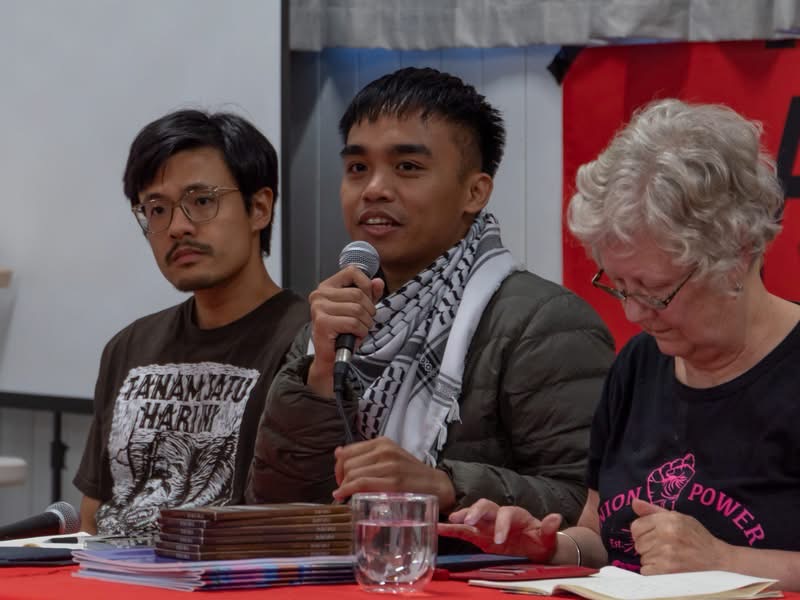
Representing PLM, National Council member and Youth Coordinator Khyl Ramos participated as a speaker in four panels: 1) Meet Asia’s new Left; 2) Climate debt, ecosocialism, and the Global South; 3) Gen Z youth revolts in the region: What can we learn?; and 4) Closing panel:
The way forward.
Meet Asia’s new Left
To introduce Left movements and parties in Asia, PLM participated in the “Meet Asia’s New Left” panel alongside Ayesha Ahmad (Haqooq-e-Khalq Party, Pakistan), N. Sai Balaji (Communist Party of India (Marxist-Leninist) Liberation), and Rocky (Transformative Justice Collective, Singapore).
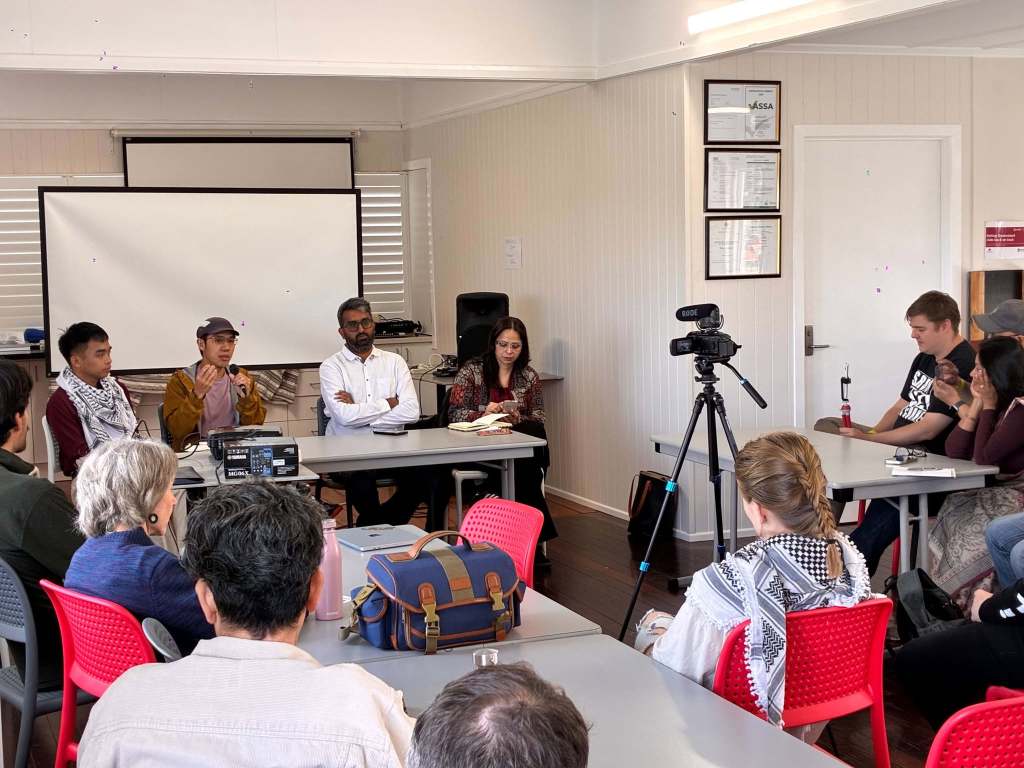
Representing PLM, Khyl Ramos discussed the party’s brief history, political framework, objectives, and current work as a national, electoral, and mass socialist party in the Philippines. The presentation situated PLM as distinct from traditional political parties dominated by elites, oligarchies, and political dynasties that perpetuate the capitalist system.
The presentation highlighted PLM’s work over the past 17 years and its continued role in the fight against the elite-dominated and anti-people character of Philippine politics. From the ballot to the streets, PLM has stood with the masses by organizing, mobilizing, and fighting alongside them for genuine democracy, people’s power, and fundamental social change.
Among PLM’s milestones and historic firsts was the 2022 elections, when it fielded Ka Leody de Guzman, a worker and labor leader, as its presidential candidate—the first time a worker candidate was fielded for the presidency. Through the Laban ng Masa electoral alliance, PLM also supported leading intellectual Walden Bello for Vice President, alongside worker and green candidates for the Senate, while also running under a partylist coalition. Although the candidates did not win, the campaign was considered a success in establishing a presence and boldly putting forward alternatives to elite politics. It also brought a progressive transitional socialist platform into the national electoral discourse, including a living wage and wealth tax, ending political dynasties and contractualization, climate justice and a just transition, and an independent and peace-based foreign policy.
The momentum from 2022 was sustained in the 2025 elections, with Ka Leody de Guzman and Atty. Luke Espiritu again running for the Senate. Together, they garnered more than 10 million votes, with Espiritu receiving 6,467,837 votes, equivalent to around 10% of the total votes cast. While neither secured a Senate seat, the results represented a significant development in advancing socialist politics and organizing through electoral work.
Beyond elections, the presentation highlighted PLM’s current work towards building a clear socialist alternative in the Philippines. This includes political education through the recently established Socialist School; mass organizing through sectoral and grassroots organizing and local mass struggles; political campaigns, including its work at the forefront of the ecosocialist movement through its green communities programme across eight regions; political publication and socialist discourse through Ang Masa para sa Sosyalismo, PLM’s online journal, and Ang Masa ang Pag-asa, its podcast; and international solidarity work with Palestine, Cuba, Venezuela, and other countries. PLM also remains part of an extensive socialist and anti-imperialist network, maintaining party relations with comrades around the globe.
The presentation further emphasized that the struggle for socialism should not be relegated to the distant future, but must be pursued today. This is also the central argument of Ka Sonny Melencio’s upcoming book, Makibaka para sa Sosyalismo Ngayon! (Struggle for Socialism Today!), which introduces the concept of a revolutionary bloc bringing together classes, sectors, and social movements. The organized forces within these social movements would be represented in the Gobyerno ng Masa (Government of the Masses) towards building a socialist Philippines.
The panel discussion highlighted the different but interconnected struggles of peoples across Asia, particularly against environmental destruction driven by capitalist forces and imperialism. Comrades also shared reflections on the work being built by Left movements in the region and the need to harness these experiences towards building a stronger socialist movement globally.
Climate debt, ecosocialism, and the Global South
PLM shared the panel with Yong Feng of Singapore Climate Rally. Khyl Ramos focused on climate debt, reparations, climate justice, and system change, drawing from the Philippine experience to discuss what an ecosocialist transition could look like. Yong Feng discussed degrowth and how people in both the Global South and North can achieve a good life without crossing planetary boundaries.
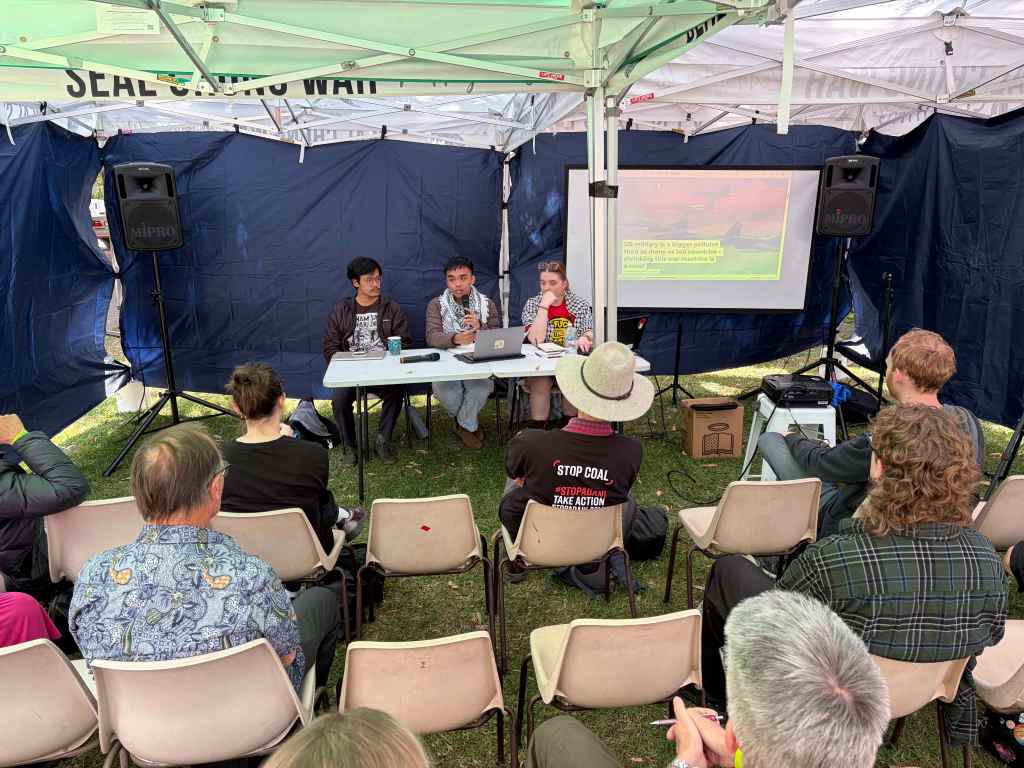
Khyl’s presentation began by asking what is owed to the Global South amidst the catastrophic climate crisis. Nepal, for example, contributes only around 0.1% of global greenhouse gas emissions yet faces some of the most devastating consequences of climate change. This reflects a fundamental injustice: those who have contributed the least are often made to suffer the most.
This is the basis of climate debt: the Global North and massive corporations have historically produced a disproportionate share of emissions and accumulated wealth through the extraction of resources from the Global South, while the environmental and social costs are borne by poorer countries and communities. Climate debt is therefore not only about emissions; it is about the historical and ongoing inequalities created by colonialism, imperialist aggression, capitalism, and unequal development.
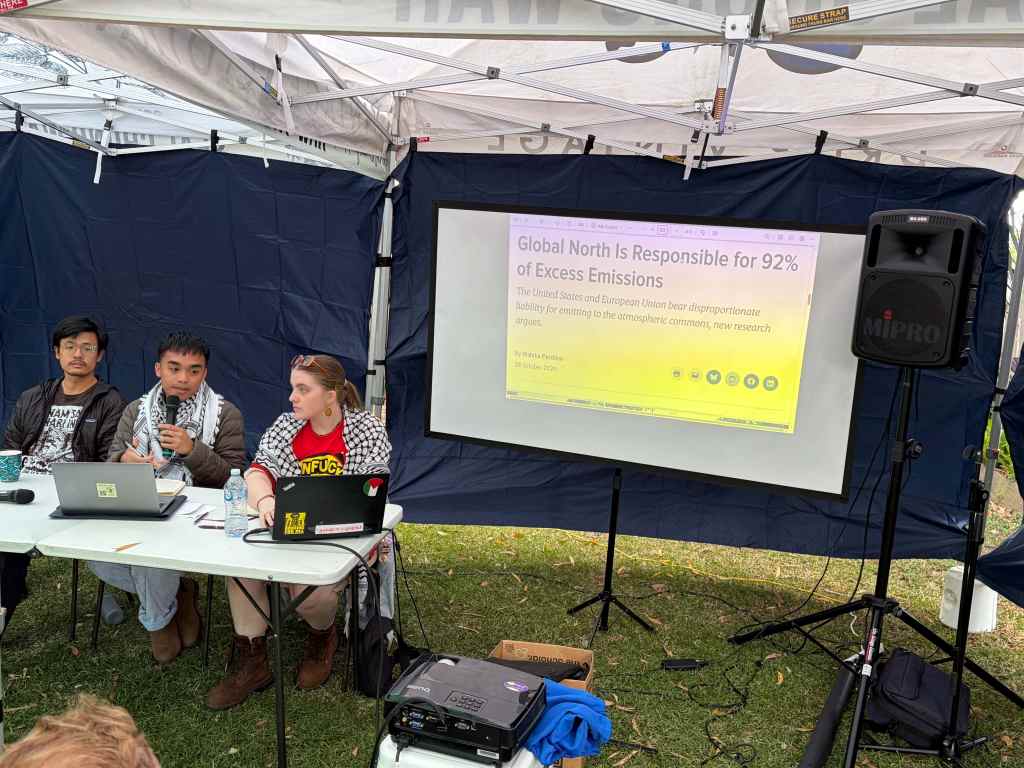
This unequal relationship continues today. The global drive for economic growth and capital accumulation drives ever greater extraction of minerals, energy, land, forests, and water, creating new sacrifice zones and frontiers where communities are displaced, livelihoods destroyed, and ecosystems degraded so that resources and profits can flow elsewhere. Around 92% of excess global carbon emissions are attributed to the Global North, while the wealthiest 10% of the world’s population are responsible for nearly half of global emissions. Meanwhile, people living in poverty are often the first to experience crop failures, rising food prices, displacement, and livelihood loss.
Further, the presentation applied Karl Marx’s concept of metabolic rift to contemporary Philippine struggles, drawing from fieldwork on the impacts of large-scale capitalist aquaculture, water extraction, floating solar projects, and major infrastructure in Laguna de Bay; watershed disruption and the displacement of Indigenous communities through the Kaliwa Dam; and the proposed Waste-to-Energy facility in Manila, which illustrates how the environmental costs of consumption can be externalized onto urban poor communities.
The discussion then examined the shortcomings of the international climate finance regime, particularly the enormous gap between commitments and delivery. Climate finance remains inadequate, difficult to access, and increasingly reliant on loans and private finance, while the Global North continues to resist mechanisms that would make its financial obligations genuinely enforceable and accountable. Despite decades of UNFCCC and COP negotiations—from the Paris Agreement to the establishment of mechanisms for loss and damage—emissions continue to rise, the world remains off track for 1.5°C, fossil fuel expansion continues, and communities across the Global South continue to bear the consequences.
The presentation therefore rejected the idea that the Global South should borrow its way out of a crisis it did not create. This requires confronting the role of the World Bank and other international financial institutions in debt and development structures that constrain the Global South. In the Philippines, for example, 37.5% of the national budget is spent on debt servicing, underscoring the need to connect climate action with debt cancellation. Corporations that have accumulated enormous wealth through fossil fuel extraction must also be held accountable: make polluters pay. Climate finance must be transformed from a system of loans, conditionality, and private profit into a mechanism for reparations, redistribution, and justice.
The presentation also critiqued green capitalism and false solutions such as carbon trading, offsets, taxes, and markets, where pollution becomes a financial transaction rather than a question of ecological limits and social responsibility. Climate action itself can become a new
frontier for accumulation, creating new markets, commodities, and opportunities for corporate profit.
Against this, the presentation called for system change through ecosocialism. An ecosocialist transition means placing the economy under democratic and social control rather than allowing corporations and markets to determine what is produced, where resources are extracted, and whose lives are sacrificed for profit. It means collective control over resources, democratic planning, protection of livelihoods and ecosystems, and technologies developed according to socio-ecological needs.
A just transition therefore cannot simply mean replacing coal and oil with solar panels and wind turbines. It must transform who controls energy, resources, infrastructure, and production, and whose needs they serve. There is no single model for this transition; it must respond to the particular histories, conditions, and needs of each country and community. In Nepal, for instance, climate and energy challenges cannot be addressed through national competition alone, as Himalayan river systems and climate risks cross borders. As PLM International Head Comrade Reihana has argued, what is needed instead is democratic regional planning that organizes energy, infrastructure, and natural resources according to social needs and ecological limits rather than competition for investment and profit.
For the Philippines, this means grounding ecosocialism in our own history and struggles through Bayanihang Sosyalismo—a socialism rooted in our particular conditions and struggles for national and social liberation. At its heart is the principle that development should not be built on the exploitation of one people for the benefit of another. This means advancing workers’ rights and women’s liberation, defending Indigenous peoples and communities, protecting the
environment, and dismantling imperialist domination. It also means building democratic institutions through which people can exercise power, from people’s assemblies and people’s congresses to other forms of grassroots self-organization, rather than leaving decisions over our resources and future in the hands of elites.
The panel concluded by emphasizing that movements in the Global South are demanding reparations and climate justice, while workers and movements in the Global North can demand that their own governments and corporations pay the climate debt they owe. With Australia preparing to host COP31 with Türkiye in Antalya this November, there is an important opportunity for Australian trade unions, socialist movements, and civil society to organize around Australia’s responsibilities to the Global South.
Gen Z youth revolts in the region: What can we learn?
The panel brought together experiences of youth mobilizations across the region, with PLM sharing the Philippine experience alongside Kirisna Veni Singham of Parti Sosialis Malaysia and moderator Isaac Nellist of Socialist Alliance. Khyl Ramos presented “The politics of spontaneity: The 2025 Philippine uprising and the making of a stronger youth movement,” examining how young people mobilized amid the Philippines’ longstanding crises of corruption, political dynasties, economic insecurity, inequality, and climate vulnerability.
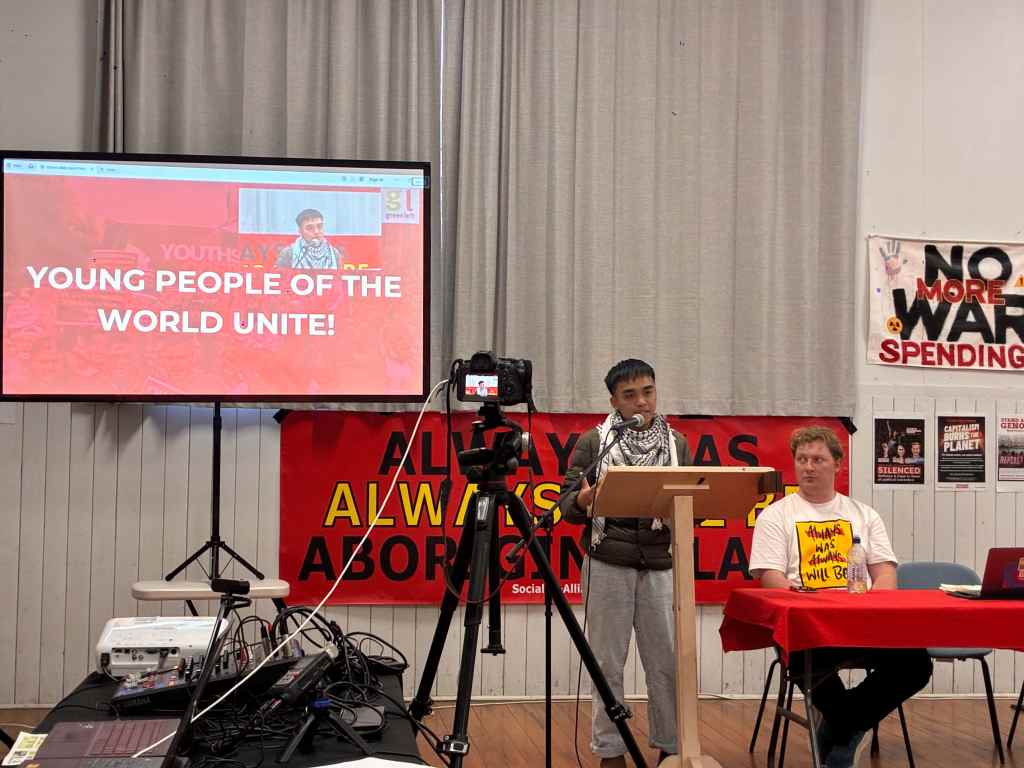
The presentation focused the context on the 2025 flood-control scandal, which became politically explosive amid severe typhoons and flooding. From 2022 to 2024, the Marcos Jr. administration allocated around ₱3.4 trillion to the Department of Public Works and Highways (DPWH), including approximately ₱1.2 trillion for flood-control infrastructure. Issues of ghost projects, substandard construction, and the misuse of public funds became especially resonant as communities continued to experience severe flooding and inadequate infrastructure. The issue therefore became part of a wider discussion about what the government funds, who benefits from public spending, and who bears the consequences when resources are misused.
These grievances were compounded by broader economic and social insecurity. One survey found that 95% of Filipino respondents said inflation had made it more difficult to cover their monthly expenses, while unemployment reached 6% in July 2026, representing around 3.14 million unemployed Filipinos. Young people were particularly affected as many struggled to transition from education into employment. Concerns over education funding and climate vulnerability further shaped the political environment in which the youth mobilizations emerged.
The crisis therefore became more than an issue of individual corruption. It reflected deeper frustrations with a political system marked by dynasties, patronage, weak accountability, and the concentration of political and economic power. These conditions helped trigger a wave of spontaneous and largely decentralized youth mobilizations.
One defining feature of the movement was the speed and creativity of youth participation. Social media, student networks, memes, humor, pop culture, and other forms of political expression enabled young people to mobilize rapidly and bring politics into everyday spaces. The September 21, 2025 “Baha sa Luneta” protest brought more than 50,000 people into the streets of Manila, connecting contemporary anger over corruption and political dynasties with the country’s longer history of authoritarianism and political impunity. Mobilizations continued through student walkouts, campus protests, assemblies, and actions across different regions.
The experience also demonstrated the limits of spontaneity. While spontaneous movements can rapidly mobilize large numbers and challenge dominant political narratives, they do not automatically translate into sustained organization or changes in political power. State repression and attempts to divide and isolate protesters further underscored the importance of organization, political education, and solidarity.
For PLM, these spontaneous mobilizations represented not only protests to participate in but a political opening for deeper organizing. PLM strengthened youth organizing across its chapters, expanded engagement with public schools and communities, particularly among senior high school students, and worked to develop an independent youth organization with greater leadership and political ownership among young people. This process culminated in the Youth and Students Assembly in November 2025, which established a 25-member National Youth Steering Council.
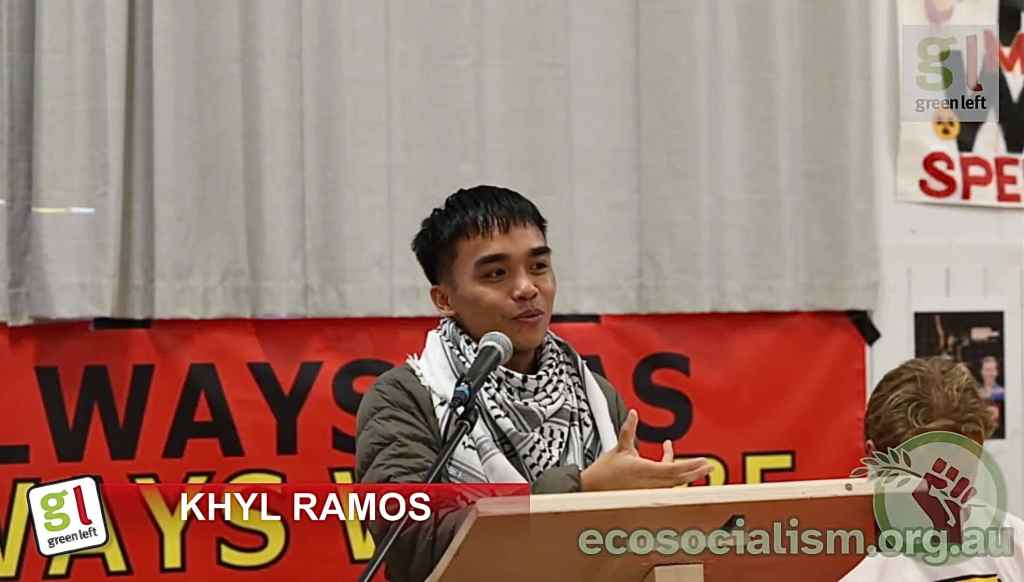
The panel identified several lessons for youth movements in the region: build organization while political momentum exists; develop political education alongside mobilization; organize beyond universities and reach public schools, working-class communities, and out-of-school youth; and ensure that young people develop leadership and ownership of their own movements. The central challenge is not simply bringing young people into the streets, but ensuring that when they leave the streets, they remain organized.
Closing panel: The way forward
The closing panel brought together the key learnings from Ecosocialism 2026 and discussed how the connections and discussions developed throughout the conference could be carried forward through collective action.
PLM’s Khyl Ramos joined Sabrina Fernandes (Brazil), Ayesha Ahmad (Pakistan), Yong Feng (Singapore), and Isaac Nellist (Australia) in the panel, with Sue Bull (Australia) as moderator.
Khyl spoke about the importance of bringing stories from the ground: from workers, urban poor communities, farmers, fisherfolk, women, young people, and communities experiencing the climate crisis and the violence of a system that puts profit above people and the planet, particularly in the Philippines. He reflected on the common threads across these struggles and emphasized that the climate crisis cannot be separated from the structures of ownership, exploitation, and power that produce it, including imperialism, colonialism, militarisation, and the unequal distribution of wealth and resources. As these systems operate across borders, he stressed that the response must also extend beyond national boundaries, making international solidarity essential to confronting the structures that continue to deepen the crisis and demanding accountability from Global North governments and corporations, as well as Global South elites.
Sabrina discussed confronting the rise of the far right by building hope and organizing around what people want, rather than only what they oppose. Meanwhile, Ayesha focused on mobilizing around the upcoming COP negotiations and challenging patterns of extraction within the “green” transition, including through climate finance, reparations, debt justice, and worker-led transitions. Yong Feng highlighted solidarity with comrades facing repression in Singapore and the importance of expanding collective action around Palestine and other international struggles. Isaac then looked ahead to the 2027 Ecosocialism Conference in Gadigal Country/Sydney and emphasized sustaining the connections and discussions between conferences.
The panel closed with a shared emphasis on turning the connections and political discussions built through Ecosocialism 2026 into sustained organizing and concrete campaigns. The way forward lies in strengthening movements across borders, linking struggles against environmental destruction, exploitation, imperialism, and militarisation, and collectively building an ecosocialist alternative rooted in the needs of people and the planet.
Ecosocialism 2026 provided PLM with an important space to share experiences from the Philippines, learn from struggles across the region and beyond, and strengthen its links with ecosocialist activists, grassroots movements, and socialist organizations internationally. The discussions deepened PLM’s understanding of how local struggles over climate, livelihoods, land, labour, and resources are connected to broader structures of capitalism, imperialism, and ecological destruction. More importantly, the conference strengthened the basis for continued international solidarity and cooperation as PLM advances its work of building grassroots movements and organizing towards an ecosocialist alternative in the Philippines.
#SystemChangeNotClimateChange
#Ecosocialism2026
September 27, 2026

